
Architectural designing 2
Architecture Work, PC William Robert King, R.A.
December 4, 2018
Question: Now that I have a program but don’t like the budget, what’s next?
This is still the easy part. We have a “program” (statement of the design elements, AKA the “wish list”),“ideal room sizes for the program”, and a “budget” (however not well liked but it’s linked to room sizes). Since the budget was a function of room size and program, I can use “room sizes” as a variable againstthe budget and program. We can also agree to increase the budget, or reduce the program and we move on.
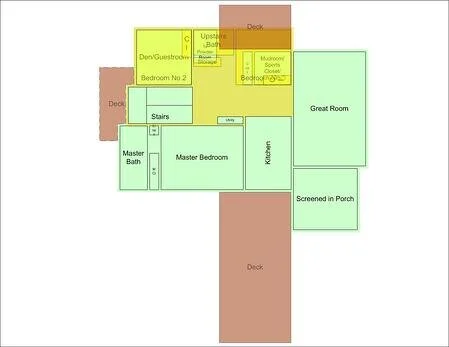
Solving this problem for room sizes, I use diagramming software to take each of the rooms or spaces from the program list along with their “ideal size” and shape (usually a square or rectangle, but it could be any shape geometry regardless of complexity). I then map the room shapes (program) out on a scaled virtual page of specific size for easy printing and sharing with clients. This gives me something in two dimensions that I can easily manipulate and “move” around later when it’s time to explore the proximityrelationships of rooms to one another.
Once these diagrammatic rooms or spaces are arranged on this virtual page (in no particular layout yet), using my mouse, I “select” them all, “group them” and use an “area and perimeter” function to calculate the total area of these rooms or spaces deducting in advance 33% of the “budget” for circulation space between the rooms. (On our website I created an Excel spread sheet titled “the Program Calculator” to do a similar thing, but already includes an allowance for circulation between rooms and spaces that is often not taken into consideration when sizing a project. This is most helpful when the physical size of the premises is a hard known number such as an existing office space or apartment.)
This diagramming software does what the spreadsheet doesn’t do very efficiently and that is to reconcilethe budget and the program with the possible room sizes.
For instance, since I now have a known program and somewhat agreed upon budget (cost per square foot), I can continue the analysis of room sizes. Using the software tools, I can simply take all the spaces together and/or separately and shrink or expand them to fit the cost per square foot budgeted by a quick move of the mouse. Each of the rooms selected is automatically re-sized until the room areas match the targeted “budget”. I can now also take these same diagrams and overlay them in partial transparency on top of any other scaled floor plan for simple visual comparisons.
Could be an “oops” moment if the rooms are too small for the program, but this starts a new discussion...what goes, what stays & if it stays, what size would it have to be in order to stay.
This is the end of the easy part...